





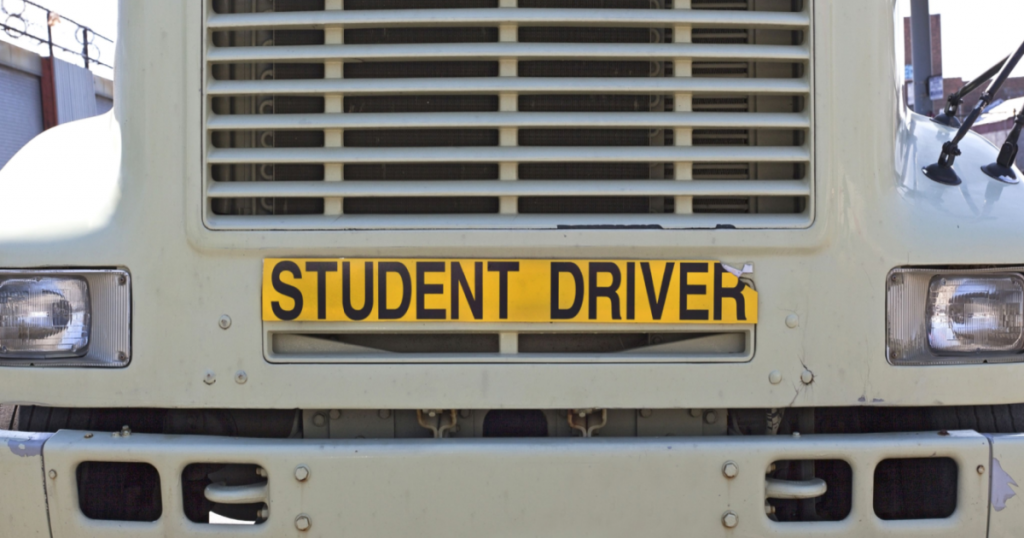
The truck driving school that you choose to attend could have a tremendous impact on your future career. While there are numerous truck driving schools to choose from, they are not created equal – and failure to get your certification from a good school could make it hard for you to get hired.
Things to consider when selecting a school
There are certain things that will make a good truck driving school stand out from a mediocre one. Some things to look for include:
- Accreditation – a good school will have sought out accreditation by an agency approved by the U.S. Department of Education
- Certification – meets or exceeds the Professional Truck Driver Institute standard, including a least 44 hours of actual drive time
- Cost – consider the cost of the school in relation to the number of hours behind the wheel, and look for hidden fees that may not be included, such as obtaining a permit, drug screening, insurance, and more
- Drive time – you should have at least 44 hours of actual driving time, not including observation time
- Equipment – well-maintained recent model tractors and trailers, including weighted trailers (because pulling empty trailers isn’t good practice)
- Facilities – clean classrooms with audio-visual capabilities, a library, and a practice driving range
- Financing – reputable schools will have financing options
- Instructors – teaching staff should have at least three years of driving experience, as well as educational experience
- Placement assistance – while no school can guarantee you a job, they can provide you with assistance in finding one after graduation
- Program length – a good truck driving school will be at least 3 weeks long to provide you with adequate drive time
- Student to truck ratio – the best schools will place just one student per truck, giving you individualized attention
Driving schools to consider
The two truck driver training companies that operate locations across the country are Sage Truck Driving Schools and Roadmaster Drivers Schools.
SAGE has been providing CDL training and testing since 1989. All of SAGE’s truck driving schools offer one-on-one driving with no more than one student per truck. This kind of private driving instruction offers students maximum hands-on driving time and no distractions. The programs are 150-160 hours and take 4 to 6 weeks depending on the number of students. SAGE focuses a lot of time on driving, with the PTDI program offering at least 44 hours of time actually operating the truck. About half of SAGE’s schools are partnerships with community college, and the other half are free standing SAGE-operated schools.
One critical difference between SAGE and most other schools is that SAGE schools do not include “observation time” in the training. Most schools place 3-4 students in a truck at a time and rotate drivers into the driver’s seat. Observation time means that the student will spend 6 to 8 hours in the truck, but will only drive for about 2 hours. However, schools that provide observation hours in the program typically advertise all time the student is just observing as “behind the wheel time.”
Observation time has some significant drawbacks, including (1) it can mislead students regarding the actual driving hours included in the program, (2) sitting and watching for several hours causes fatigue, (3) students talking, joking, commenting can create distractions, (4) causing stress for the driver, (5) taking the instructor’s attention away from the driver, etc.
SAGE schools have been accredited nationally and programs have been certified by the Professional Truck Driver Institute (PTDI). PTDI is the only national trucking industry school certification entity, and only about 5% of all school have been certified.
Christopher Thropp
Vice President
The SAGE Corporation
Roadmaster Driver Schools don’t meet all the criteria for a “Good” truck driving school, but they’re a lot better than most, the quality is consistent, and they have a bunch of locations around the country. An upside to all the marketing they do is that everyone in the industry knows their name, so even if the training isn’t the absolute best, at least no one will turn you down because they don’t recognize your school.
If there isn’t a Sage or Roadmaster near you or you can’t afford their training, look at other training programs in your region and compare their offerings against our list of “things to consider when selecting a school.” Regional and local schools can be just as good or better than national schools, but there is a wide variation in the quality and price, so do your research and make sure they meet your criteria.
Click Here For Our Most Popular Pages