







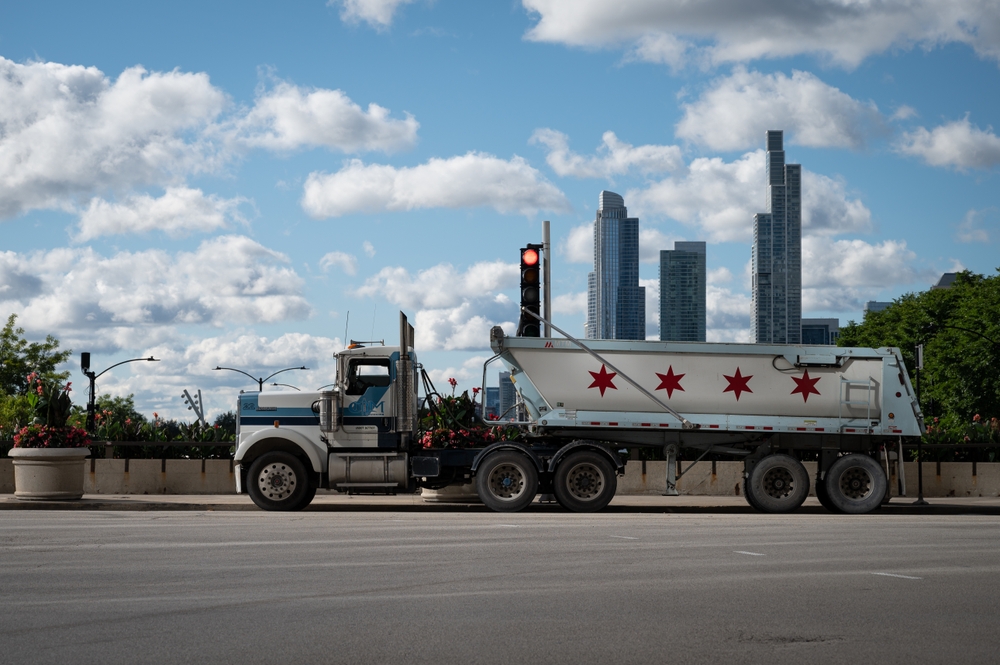
For the first time ever, a Chicago freight bottleneck has claimed the top spot as the most congested truck interchange in America. According to the American Transportation Research Institute (ATRI), the intersection of I-294 and I-290/I-88 in Chicago has overtaken the long-standing No. 1 bottleneck in Fort Lee, New Jersey.
ATRI, the research arm of the American Trucking Associations, released its 15th annual Top Truck Bottleneck List after analyzing 2025 GPS-based truck data. The findings show that freight congestion continues to worsen nationwide, even as infrastructure spending increases in many regions.
Truck Speeds Continue to Decline
Across the more than 300 freight-critical locations ATRI monitors:
- Average rush-hour truck speeds dropped to 33.2 mph, down 2.8% from the previous year.
- Among the Top 10 bottlenecks, average speeds fell even lower to 29.6 mph.
- Nearly three-quarters of the top bottlenecks report average truck speeds under 45 mph.
As a result, congestion delays now equal the equivalent of 436,000 drivers sitting idle for an entire year, according to ATRI President Rebecca Brewster.
While some slowdowns stem from work zones tied to infrastructure improvements, congestion still poses a major challenge for freight movement and supply chain efficiency.
Top 10 Freight Bottlenecks in 2026
In addition to Chicago’s new No. 1 ranking, the remaining Top 10 locations include:
- Chicago, IL: I-294 at I-290/I-88
- Fort Lee, NJ: I-95 at SR 4
- Atlanta, GA: I-285 at I-85 (North)
- Houston, TX: I-45 at I-69/US 59
- Atlanta, GA: I-75 at I-285 (North)
- Atlanta, GA: I-20 at I-285 (West)
- Nashville, TN: I-24/I-40 at I-440 (East)
- Houston, TX: I-10 at I-69/US 59
- Cincinnati, OH: I-71 at I-75
- McDonough, GA: I-75
Notably, Atlanta and Houston each appear multiple times, reinforcing their roles as major freight hubs facing heavy congestion.
Infrastructure Investment Shows Results
Although Chicago now holds the top spot, Illinois previously reduced congestion at the Jane Byrne Interchange through sustained infrastructure investment. That location no longer ranks in the top 25, showing that targeted funding can improve freight flow.
Similarly, improvements near the George Washington Bridge helped boost truck speeds between New York and New Jersey after years of being the worst bottleneck.
Industry leaders say this data provides Congress with a clear roadmap as lawmakers prepare to reauthorize surface transportation programs.
How ATRI Measures Freight Bottlenecks
ATRI ranks bottlenecks using:
- Freight truck GPS data
- Customized congestion analysis software
- Terabytes of operational trucking data
- Monitoring of over 325 freight-critical locations
This data also supports the U.S. Department of Transportation’s Freight Mobility Initiative.
As freight volumes grow and urban congestion intensifies, the Chicago freight bottleneck now stands as a reminder that infrastructure investment remains critical to keeping America’s supply chain moving efficiently.
Source:



Leave a Comment