







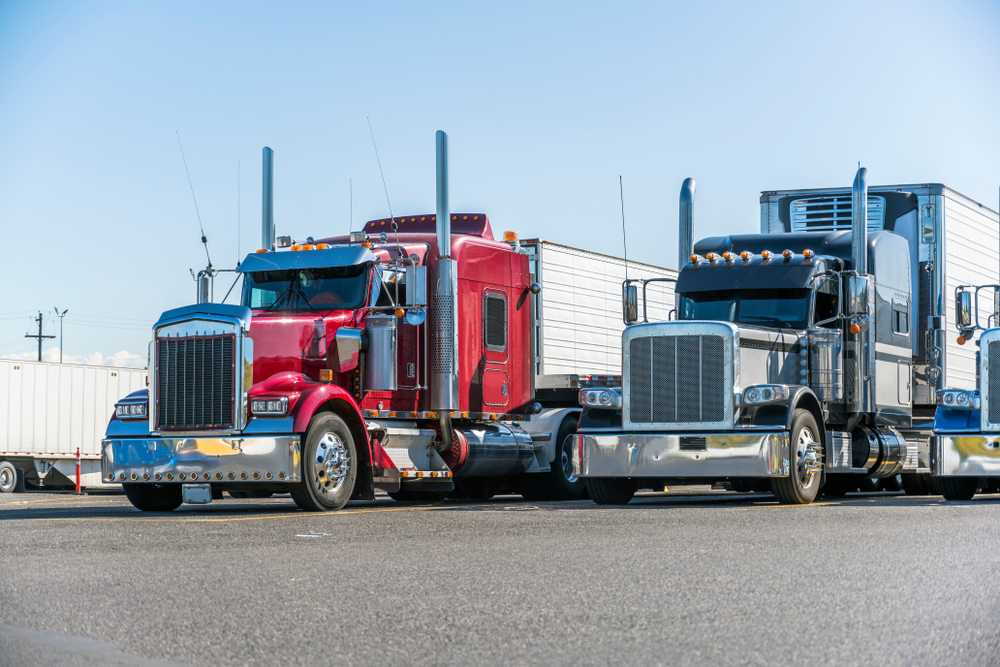
A Mixed Fleet Approach Defines Trucking Decarbonization
The latest findings from the North American Council for Freight Efficiency (NACFE) highlight a clear reality: trucking decarbonization strategies do not rely on a single solution. Instead, fleets must adopt a “Messy Middle” approach that combines diesel, natural gas, battery-electric, and hydrogen technologies based on real-world operations.
NACFE’s Run on Less—Messy Middle study tracked 14 Class 8 trucks across 13 fleets over 18 days, covering more than 73,000 miles. The research focused on real freight operations rather than controlled testing. As a result, it provided practical insights into how different powertrains perform under actual working conditions.
Diesel Remains the Benchmark
First, diesel continues to lead in flexibility and efficiency. Modern diesel trucks achieved fuel economy between 9 and 11.8 mpg, which represents a significant improvement compared to past averages. In addition, fleets using renewable diesel can reduce carbon intensity by up to 80% without changing operations.
Therefore, diesel still plays a critical role in near-term decarbonization. It offers strong performance, established infrastructure, and immediate efficiency gains.
Natural Gas Offers a Practical Bridge
At the same time, compressed natural gas (CNG) and renewable natural gas (RNG) provide a viable alternative for specific applications. Fleets using these fuels achieved 4.5 to 6.7 miles per gallon equivalent while covering 400 to 700 miles daily.
More importantly, RNG can deliver carbon-negative results when sourced from organic waste. As a result, many fleets see natural gas as a practical transition fuel that supports sustainability goals without sacrificing operational capability.
Battery-Electric Trucks Expand Capabilities
Meanwhile, battery-electric vehicles (BEVs) continue to improve. NACFE data shows that BEVs now operate 350 to over 500 miles per day when matched correctly to routes and infrastructure. In some cases, fleets even achieved up to 875 miles in a single day.
However, performance depends heavily on terrain and charging availability. For example, steep routes can significantly reduce efficiency and range. Therefore, fleets must carefully match BEVs to the right duty cycles to achieve optimal results.
Hydrogen Shows Promise but Faces Barriers
Hydrogen fuel cell vehicles also demonstrated potential in the study. These trucks delivered 120 to 430 miles per day with stable efficiency. In addition, hydrogen offers faster refueling and lower weight compared to battery-electric systems.
However, limited infrastructure continues to restrict widespread adoption. As a result, hydrogen remains in an early development stage, with most deployments still focused on testing and pilot programs.
Key Factors Driving Fleet Decisions
NACFE emphasizes that success depends on aligning technology with operational needs. In particular, fleets must evaluate several critical factors:
- Route and duty cycle requirements
- Infrastructure availability
- Operational readiness and driver behavior
- Economic viability and total cost
- Sustainability goals
Additionally, real-world data plays a crucial role in decision-making. Fleets that rely on actual performance metrics rather than theoretical specifications are more likely to succeed in deploying new technologies.
The Shift Toward Portfolio Thinking
Ultimately, NACFE encourages fleets to adopt a portfolio strategy. Instead of searching for a single solution, fleets should use multiple powertrains across different applications. This approach allows companies to balance efficiency, cost, and sustainability more effectively.
In this evolving landscape, the trucking decarbonization strategies that deliver results are those grounded in real-world data, operational alignment, and flexible planning.
Source:



Leave a Comment