







Around 200 trucking industry companies have banded together to form the Coalition for Transportation Productivity (CTP), a group whose mission is to lobby Congress to increase the maximum weight limits for six-axle trucks.
Made up of truck manufacturers, shippers, carriers, and trucking associations, the CTP sent a letter to congress asking them to consider raising the maximum weight limit for six axle trucks to 97,000lbs.
According to the CTP, this change would save $2.4 billion in infrastructure repairs, create a stronger economy, reduce pollution from trucks, and make roads safer, all by reducing the number of trucks needed to haul the nation’s freight.
In response to calls from safety groups that heavy trucks would make roadways more dangerous, the CTP says that adding the sixth axle is key to maintaining safety, saying that a six-axle truck weighing 97,000lbs has the same stopping distance as a five axle-truck weighing 80,000lbs.
To back up its claims, the CTP sites multiple studies including the DOT, the ATRI, the Wisconsin DOT, the Transportation Research Board, and the Maine DOT.
Next Story: Dispatcher Guilty Of Defrauding Brokers
Source: gobytrucknews, truckingnewsonline, fleetowner, transportationproductivity
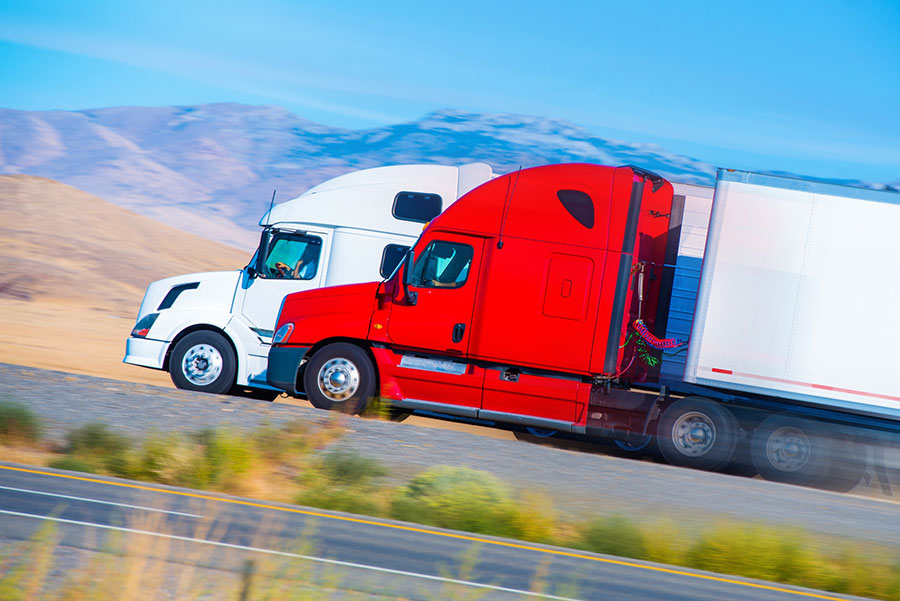
Image Source: heavydutytrucking



I live in MI and own a trucking company. We have the highest weight limits in the country. My trucks pull 8 axle asphalt trailers weighing upto 160,000lbs. I can say the stopping distance is simular to a 5 axle 80,000lb truck. I believe it would benifit our country’s economy and improve traffic flow on our nation’s highways saving Americans time and our companies money .
Great, then put bigger engines with more horse power, more gears and drop the national speed limit to 60 for cars and trucks. Ask yourselves this question honestly…if the industry goes to the heavier truck weight do you really think it will mean less trucks on the highways? Please! It will just mean higher revenues for trucking companies. It won’t benefit drivers one bit. Most drivers out there can’t handle what they have now. I can’t imagine adding 17,000 lbs more. You think crap is being torn up now? Can’t wait to see what happens that first winter when these trucks go through Virginia, West Virginia and Tennessee. Good freakin luck with that nightmare!
So we’re not destroying the highways fast enough?
Former trucker, BTW.
97,000# over 22 wheels equals less weight per inch of tire width. My personal experience for having pulled tridem trailers in Western Canada is that a 6 axle combo is far more stable than a typical 5 axle unit. I’m told they have a lower COG- it sure feels that way. I say- lets do this.
As an 8 axle rgn driver I can tell you it takes more than an extra set of brakes to safely handle a heavier truck.
Once again! They will be getting us to do more for free! 45,48 and currently 53′ soon to be 58 or 65′.. 80k soon to be 97k.
And what about all the single owner ops who will spend 3/4 of their income on fuel? How about DOT holding shippers and consignees accountable for all the wasted hours a driver spends at their dock because they are lazy when a driver could be hauling all that freight they are worrying about covering.
There you go, heavier loads and less money!! Will put me out of business. Higher tolls and I’m am sure the payload will NOT increase, shippers and dispatcher you to want haul the heaviest you can now and pay the less they can pay. That will make things better!!
Only congress with a wink wink would buy I mean sell out to this being safer and better.
So now that want heavier weights to destroy our equipment faster, while dropping the fuel mileage significantly and to pay us the same rate or less to haul this freight. Not to mention faster road deterioration due to heavier weights being displaced in the same square footage causing road destruction ( deeper groves in the road from these new weights and quicker after each repair). And lets not forget less stopping power, more runaways in the mountains, and far worse accidents when they happen with much more destruction of property and loss of life. Nothing like the idiots. Again and I have said it over and over. None of these people care about SAFETY not this coalition, not the DOT, not the FMCSA ,not the Federal Government, it is all about MONEY !!! The rest of their talk is all lip spittle say one thing to make the ignorant masses think they really care ,all while rubbing their greedy hands together , thinking money , money , money and laughing all the way to the bank
Gear jam, you are spot on. It’s ALWAYS about the money. These increased weights are going to give a tremendous advantage to the giant carriers and may be the final nail in the coffin for the owner operator and small fleet owner. Costs will skyrocket…rates will not. As a side note, Mary Nichols, head of the California Air Resources Board said it all when she said, new emission standards will all but eliminate the small trucker and that’s o.k. Because it would be so much easier to regulate just a few large carriers.
Gearjamn,,,,you are exactly right. They dont care about us at all it’s all about the money. It doesn’t seem like anything we ” the common sense people ” say matters. We’re not as smart as the college grads that figure this crap on computers,,,not like we deal with it everyday or nothin
Seems to work in michigan where weights can reach 165,000 lbs on 12 axles
I’d like to know why you won’t print my comments.
The 200 company request to congress did not include truckers and no mention of drivers pay increase for hauling this load. They know how to line their pockets but not drivers they might get more support. I have never even heard of infrastructure issues in canada we run 5-10 axles and our roads are smooth. The problem is insufficient funding for road repairs fuel tax to repair roads and bridges.
From my perspective, the 5 axle 80,000 pound truck is like a Model T. Most of the developed world runs 7, 8 or 9 axle units with disc brakes and real retarders, at gross weights of 110,000 pounds and up. Let’s not even talk about Australian road trains…
Infrastructure wear stays much the same as long as axle loads stay the same.
” all by reducing the number of trucks needed to haul the nation’s freight.” How many jobs are they planning to reduce?
I’ve been to Michigan. The roads have been destroyed by the heavier trucks. In fact Michigan has some of the worst roads in the USA. Every highway is rutted and damaged. The bridges up there? Forget it! This is just more of the same from the companies that want to control truckers.
Here’s an idea! Pay the truckers more money! You know what might happen? More qualified people will come into trucking resulting in more productivity. Every one of these trucking companies that is behind this push for EOBRs, heavier weights, cameras facing the drivers, etc., etc. deserve a nationwide shutdown.
When will it happen? Until it does, expect more of the same. Until then, a trucker is being treated no better than pond scum.
Clearly a lot of these posters haven’t actually spent any time with multi-axle hauling. As a Canadian driver, this kind of hauling isn’t even anything remarkable. Each axle comes with its own set of brakes, the ratio of stopping power to weight remains unchanged. Stability is actually better, and the loads that benefit from a greater GVWR tend to have lower centers of gravity regardless.
Any concerns over “hauling more for less” have little to do with this, and far more to do with people’s ability to conduct business properly. Which has ALWAYS been the case, no matter what the GVWR might be. Quit hauling cheap freight, quit working for cheap carriers. And yes, mileage suffers some, but the cargo/fuel ratio improvement still blows away anything any aerodynamic aid or tire will offer. (I’ll still average 5.5mpg with 90000lbs of payload on a 5-axle trailer. Underskirts and trailer tails, eat your heart out).
Lastly, Michigan’s roads are a mess because 1) They haven’t been maintaining them, and 2) their multi-axle formula is flawed and doesn’t involve steerable axles. Take a look at at their neighbour (Ontario) and their SPIF formula for a much better implementation that works better, despite even higher weights/axle.
When they took us to 80,000 lbs they spoke the same reasoning and said it would remove some trucks from the highways and be safer. B.S. I have driven company trucks that I was not comfortable hauling 30K in, for safety reasons. ONE thing that nobody has spoken of is the higher fuel and maintenance costs that will be incurred with the additional weight. When we went to 80K , the rates increased for about a heart beat then went back to what they had been. Another thing to consider is that parking these centipedes in a truck stop is very difficult to say the least. Just look at the difficulty that drivers have with spread axles in bending them into parking spaces. You also leave a lot of rubber when the tires slide instead of roll while backing or making tight turns. Truck stops are getting smaller and smaller as time goes on. BUT, the main thing to consider, the UNDER TRAINED drivers coming out of the “puppy mill” trucking schools. Some spend as little as 7 days on the training lot before they are turned out with a trainer for as little as 21 days before being given their own truck. NO THANK YOU!!!!! It gets scary enough out here with them hauling 80K.
Also, lets not forget, they probably did not even consider winter driving conditions. It is hard enough to stop 80K quickly under ideal, dry, conditions. Think of the additional 17K in winter conditions when you are on a sheet of ice. All of the additional sets of brakes, especially if all are not adjusted equally, are still going to make you squirrely on the roadway. If you have to stop on an icy hill, in either direction, because of traffic having to come to a stop, I have seen trucks start to slide down the hill due to gravity and the weight on the truck. It wasn’t pretty.
Winter is a wash, actually.
More axles can actually help on ice patches, because it’s rare for all the axles to be on ice at the same time. Having 2/3 axles with traction is a better situation than having 1/2 axles secure. And in the event all the axles are on ice, you’re equally screwed regardless.
When cutting through snow, the leading tires/axles are the ones most in danger of losing traction, with the trailing axles being given a crushed path to work with. So again, better traction with 2/3 of the trailer axles grabbing good than with only 1/2 axles.
The only real downside is when the trailer doesn’t have the ability to lift the third axle when running light/empty, which can leave you in a situation where the weight is spread out even worse than an empty tandem setup.
Let’s not forget they also want to lower the qualifying age for a CDL to below 21. How is that helping safety, or the environment, or anything else? What it is helping is the big companies with the big lobbying bucks who can’t find enough drivers to do this lousy-and-getting-lousier-every-day job.
I’ll agree to the increase if they increase the rates, my pay, and if they themselves will unload my truck. But of course I’m a company driver.
These shippers, reciver and carriers that want this. Must pay for areas were we can park safely.
more liability on the driver , more stress on the driver , equipment expense to the o/o is increased , to what end? more freight shipped , more revenue created by the driver that they ll never share in , read that , uncompensated work done . less vehicles on the road? ha ! that s a hot one …. , even more wear and tear on already stressed infrastructure , we re having trouble keeping up with it now , think what it will be like in 10 or 15 years with just as many ,more than likely more, trucks on the road with average weight north of 87k …..this is one of those things where enough is enough until we catch up on infrastructure ,reasonable and adaquate training , parking issues , sensible and fair regs and rates that will be good enough to sustain someone who might want to start in the business of moving stuff around . big companies see more profit for the same pay out and big brother sees easier control with all the rules that will have to be made , oh yeah, more hap hazardly “trained” officers out there to.maybe even another government agency . thats progress.(?) more ,more ,more …..when is enough ,enough ..?
I think that this industry has much bigger problems that these companies pushing for heavier weights need to focus on. How about a graduated CDL that denotes people with more experience and favors their skill and expertise? How about greater standards for driver trainers and more comprehensive training in CDL schools?
How about more parking. I think that every town in the USA that needs a truck to deliver to one of its businesses should have a parking lot with porta potties and a dumpster with security cameras and a few picnic tables.
Also where’s the accountability for all of the tax dollars we pay to rebuild the roads? Hey 200+ companies and groups pushing for greater weights on the trucks! How about you do something that actually benefits the industry instead of your wallets?
This puts an unnecessary burden on already hurting small business truckers and the already hurting infrastructure such as what happened in Minnesota on I-35.
I actually helped the Navy dive team search for victims by delivering their portable office right to the base of the collapsed bridge. I’m sorry for the people who lost their lives on the bridge.
I think the people who are pushing for the heavier weights have very clear intentions: More profits for the shippers and receivers at the cost of the American taxpayer (in regards to road repairs) and the cost of the truckers (more maintenance, more stress on equipment, and more expenses to install the extra equipment and modify existing equipment)
Thanks, but no thanks……
Long time O/O 30+ yrs. RGN Hevy Haul.
Seeing, what today’s drivers (schmucks) are capable of…I highly doubt the idea of 97,000lbs. GVWR will bring any good to the industry.
Let me see. Heavier loads governed trucks at 60 or 61. Drivers falling asleep from slow speed. 97,000 lbs truck hitting traffic with driver asleep at the wheel from extreme boredom from slow speed. Heavier truck impacts the stop traffic. Several people are instantly from the 97,000 lbs truck. And that’s on impact. Another 700 feet before the truck will stop or turn over killing more people. Truck driver is dead. And there is no one left to blame other the the politicians who up the weight limit and forced governed speeds.
And yet, I find it amusing that often times shippers are unable to load my trailer anywhere near max weight.
They don’t double up the pallets because of crush, they won’t use decking because it’s time consuming to set up, I get a “full load” that’s barely chest high and only weighs about 34k. I could take on another 4-5 tons and still be legal!
Densest stuff I’ve ever pulled is paper. 6 rolls of that and your at max. (Well, and steel, but more often they give that to flatbeds not vans)
As a Canadian OTR Driver I routinely haul Tridem Trailers. Here are my observations:
1) My mileage pay rate stays the same.
2) If the overall route is a hill climb such as Vancouver to Calgary It takes me 3 hours longer to complete the 600 miles through hilly routes as we have here in BC and AB.
3) Some Carriers here with the majority of their business in tridem-weight loads equip tridem trailers with DISC BRAKES and the stopping power is on par with 4 wheelers, at twice the stopping power of drum brakes with none of the brake fade or runaway issues.
4) Disc brakes on Tridem trailers should be mandatory if this new law for heavier loads is granted.
5) The heavier loads defeat wind resistance because the momentum defeats the resistance much greater.
6) Fuel economy on a DD13 I-Shift Volvo decreases maybe 0.1 MPG on the rolling hills situation here in BC or AB. The momentum on the downhill can carry you into an additional 3 miles of flats or help with the next uphill if you rollercoaster the downhill. Just stay off the jakes or the brakes until 85MPH. Don’t do this if you don’t have a clear line of sight for the next two miles or an area that has technical hazards such as traffic, intersections, cyclists, cops, potholes at the end of the downhill, deer and other wildlife, etc.
7) It will take either falsifying logs or completing the driving in two shifts due to slow progress down the road because of the heavy weights.
8) Tire wear, suspension wear, transmission wear, steering component wear, and stress on other major components will definitely with heavier weights shorten the life of the truck.