







California lawmakers have just passed a bundle of bills that will provide $895 million to help reduce emissions from large trucks and buses in the state. The funds are aimed at helping carriers and individuals comply with – and even surpass – current emissions standards.
Truck and engine manufacturers, carriers, and truckers have long had to be aware of not only emissions standards put in place by the federal government, but also those put in place by the state of California. With the largest economy of any state in the country – and the 6th largest economy of any country in the world – it’s hard to ignore.
Since the strict air-quality regulations put in place by California can be expensive for companies to keep up with, the state is making a record-breaking amount of funds available to help get old low-efficiency engines off the road.
Known collectively as the California Clean Air Initiative, the bills are taking aim at air pollution caused by “mobile sources.” Trucks account for 33% of the state’s NOx emissions and 26% of the diesel particulate matter.
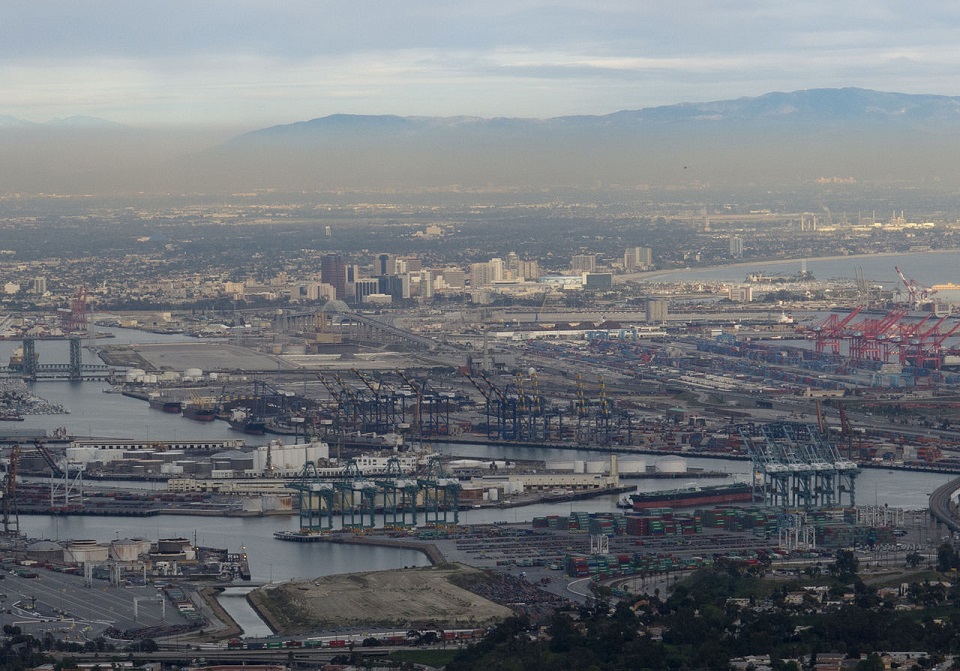
$140 million will be going toward incentivizing higher-efficiency vehicles at ports. One barrier standing in the way of the adoption of lower-emission engines running on renewable natural gas (RNG) is the lack of infrastructure to support it. But adopting RNG engines is significantly easier in a smaller geographical area. This makes trucks that serve large ports like those at Los Angeles and Long Beach prime candidates for RNG engines.
$180 million will go to the Clean Bus and Truck Program, which gives point-of-sale incentives to people and companies buying electric, fuel cell, and low-NOx natural gas vehicles.
$250 million will go to the Carl Moyer program. According to the California Air Resources Board, the Carl Moyer program provides grants for “cleaner-than-required engines and equipment.”
The money for these programs is coming from cap and trade funds collected from high-polluting businesses. It will be the largest investment in a clean air initiative in the history of the state.
Source: truckinginfo, businesswire, ngtnews, CARB



I hope state-run healthcare and the new tax plans will pass, so states like California will have less money to burn on stupid things like this.
Cool, R&D cleaner technology, but don’t mandate it. It’ll migrate over in due time, just like during GW Bush’s period when they did the MPG laws that mandated new vehicles to have certain MPG requirements, without toying with vehicles that are already on the road. Do the same thing here, let the new trucks have their technology, and leave those who would rather use older model trucks, have theirs. Eventually the older model trucks will phase out of use.
Andrew you need to know your enemy better. The piece says the projects are funded by California’s Cap and Trade Tax. That revenue is only supposed to be used to reduce emissions and green house gasses. Feds have no control over it.
there is more toxic chemicals coming from the exhaust of a four wheeler then there is from a diesel engine. Why not put more restictions on them .
I wonder if the $875million originated from astronomical fines and law suits brought against diesel engine manufacturers as a result of past persuits of unachievable diesel engine emissions control failures.The feds set the standard,the diesel manufacturers dump enormous amounts of revenue into R&D until those revenues run dry,the diesel manufacturers have no choice but to deliver the defective product to the market place (with the stamp of approval by the EPA)or go bankrupt,then face fines from the EPA,the SEC and law suits from the transportation industry.What a vicious circle of absolute nonsense.
I’m so happy that we truck drivers are able to bail California out of there debt
“Known collectively as the California Clean Air Initiative, the bills are taking aim at air pollution caused by “mobile sources.” Trucks account for 33% of the state’s NOx emissions and 26% of the diesel particulate matter.”
Diesel is the waste product after THE oil companies make gasoline. So THE diesel was invented, here is THE QUESTION…why are the pil companies not be charged to make diesel motors run cleaner, not the owners, trucking companies, manufacturers, etc?